

Writing into Summer
Words as the world warms

The solstice approaches and the days just keep getting longer.
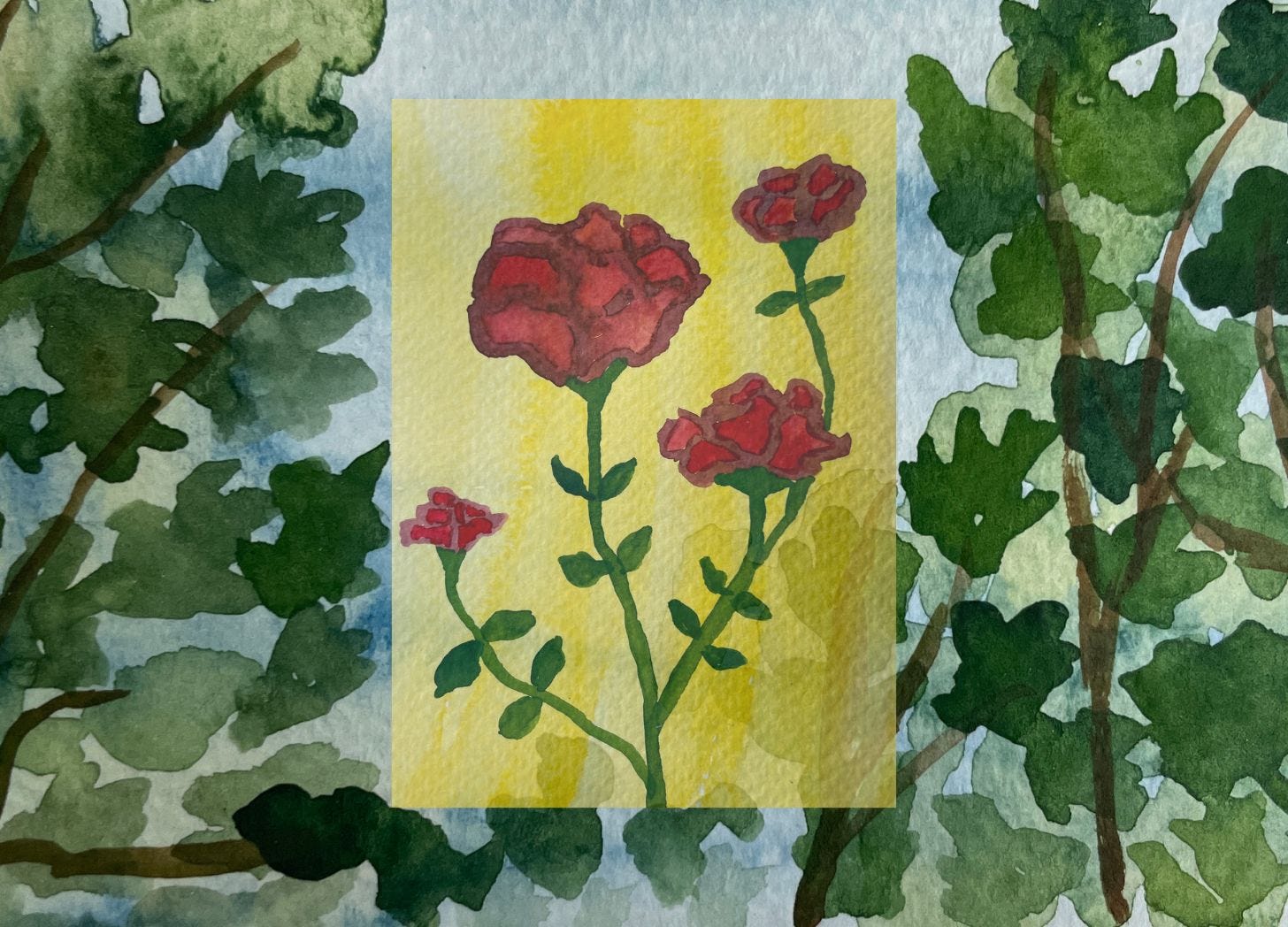
I recently taught the summer edition of my Writing with the Seasons course where we discussed how summer influences our creativity and wrote our ways into the season together.
We noted differences between summers where we are (Oregon) and where we grew up (for many of us, elsewhere). I thought of my midwestern childhood and how summer could feel otherworldly, the heat so high and the air so waterlogged, the ground shimmered. The cottonwood seeds would collect on the roadside like snow. And then, late in the season, the brooding that broke into thunderstorms.
One interesting thing that came out of our lively discussion about summer writing is that summer doesn’t always feel like the best time for writing here in Oregon. In some ways, summer seems made for writing. The days are long. The world is in bloom. Everywhere, we are surrounded by tangible, tactile fullness. School is out, which, when I was in school and before I was a parent, seemed like an ideal time to focus my attention on writing and reading whatever I wanted. Summer break is the perfect length to really get going on a longer project. Over at Craft Talk, Jami Attenberg runs 1000 Words of Summer, which supports writers through an intensively generative two weeks each year. Summer can be a perfect time to bring a project into being.
And yet, even when I was a student and summer meant long stretches of free time, I often felt disoriented, liquified, sad, in the summertime. Nina MacLaughlin writes about this phenomena in her book, Summer Solstice:
“Summer comes and it’s as though the maze ridges on the surface of my brain melt and I am left with a smoothed-out mostly useless mass of gray-pink meat-matter underneath my skull. Heat-stunned, dull, and damp with sweat or about to be. In cold, one can always put on more clothes. In thick heat, there’s only so naked we can get.”
She goes on to say that “summer is for bodies” and I think that gets at the root of it. Summer is the season in which we cannot escape our embodiment. It is the leafing time, the fruiting time. In summer, we are entirely unfurled.
For those of us who need the quiet tensions of the dark half of the year to hear our thoughts, summer can challenge the writing process.
And, of course, in addition to the malaise that can creep into those of us who suffer from brain melt, there is the anxious side of summer. Here in the western U.S., there are wildfires to watch for, smoke events that could keep us indoors for days or, worse yet, force evacuation. Always, as I pick the fruits of this bright season, the changing climate, with all its heat and drought, is never far from mind. Summer is a beautiful and worrying time.
I find that the best moments of summer for me are those in which I can embrace the melting of my brain and simply be in my body in the present, casting aside anxiety or thoughts of an uncertain future while wandering out among trees, sitting by water, watching and meandering. It’s a good time for taking notes, for catching strange stray inspirations. It’s a generative time, a good time for experiments.
To write in summer, it helps me to find a little structure, nothing too rigid (summer is the melting season after all), but something loose to hold me, a hammock I can sway in.
This is why I’m running a new class, Writing with Plants, Animals, and Ecosystems, in the summer. It’s a generative class in which we’ll write with the more-than-human, exploring techniques through prompts, practice, and reflection. There won’t be any homework. I’ll suggest all kinds of readings and resources and practices, but none are required and you can save them for another season if you like. We’ll have a different focus for discussion and practice each week. Come write with us!
Happenings
Writing with Plants, Animals, and Ecosystems


Writing with Plants, Animals, and Ecosystems, starts July 6. If you like this newsletter, this class is made for you.
We’ll spend six weeks generating six new pieces while learning techniques to collaborate with the more-than-human. If you’re like me and you enjoy summer writing that is exploratory, curious, whimsical, embodied, and deeply engaged with the natural world, please join us! Recordings of each class can be provided to enrolled participants if they are not able to attend live sessions.
A Spell to Write in Summer
Invoking Your Sense of Summer
Make a list of what you associate with summer. What memories come to you in summer? What images and symbols? What stories or games or songs? What do you notice in the summer? How does summer feel to you? What is summer to you?
Look at your list and mark the ones that feel most resonant to you right now. Which ones are glowing for you?
Pick one of these and write it down in its own space (at the top of a page). Use this as your prompt. Delve into it. It might lead you to personal writing about what it means for you. It might lead you to a poem. It might lead you to a story. Follow your sense of summer and let yourself really sink into it as you work. See what it opens for you.
Plan Your Summer Writing: Resources
Below the paywall is an exercise for planning your summer writing, including prompts for the full and new moons of the season and and a summer writing playlist.
